Other maps
Chemical PlantMonsterGuide
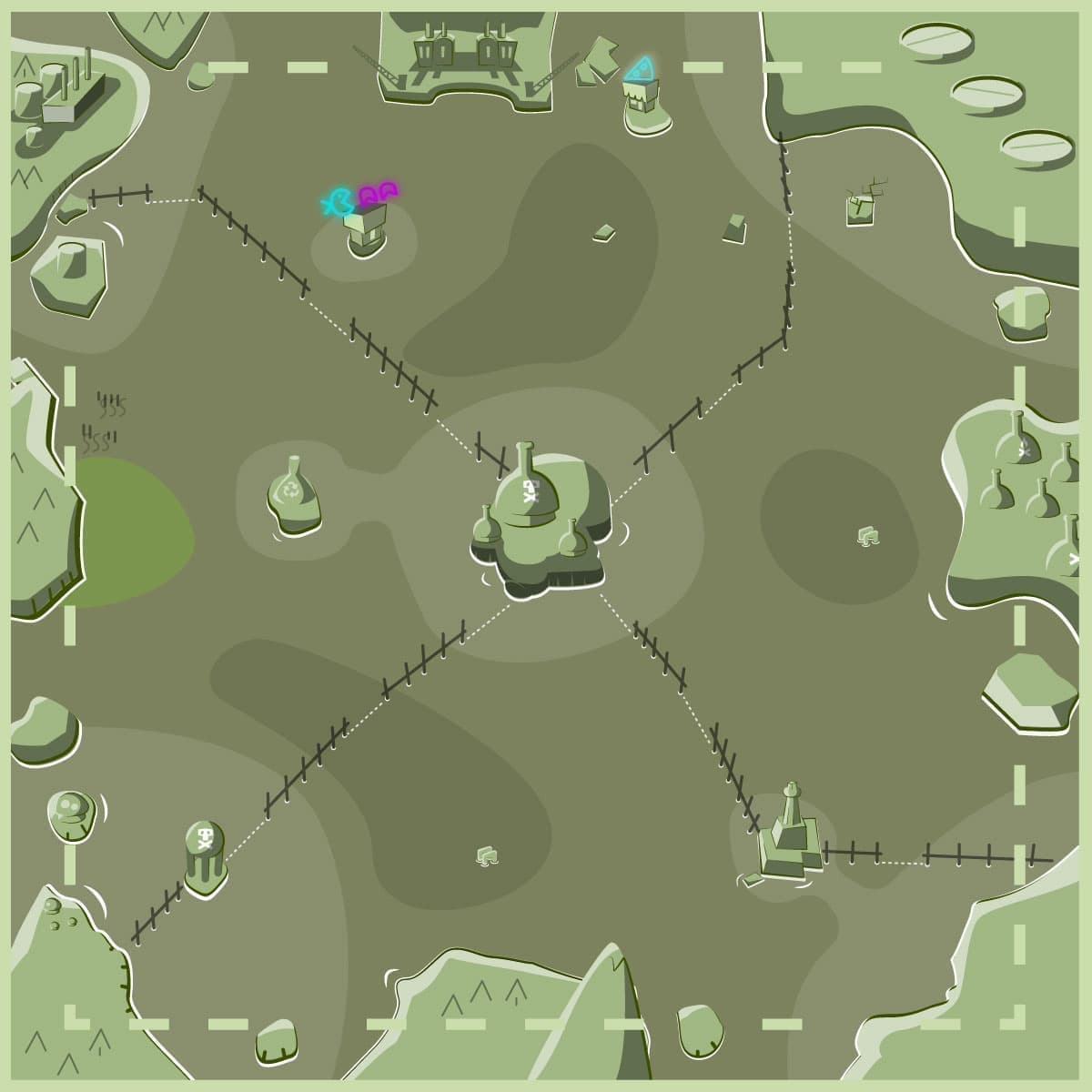
Map monster location and details on Chemical Plant in Creatures of the Deep.
Monster Quest: Nightmary
At the Chemical Plant, Dr Ozon investigates a radioactive disaster that turned an industrial zone into a chaotic ecosystem of mutations. Between improvised experiments and field observations, he tries to understand how such instability gave rise to Nightmary. Progress is rarely linear, and some required materials come from far beyond the area itself. Planning ahead becomes part of the work, especially when certain items must already be in your inventory to avoid unnecessary travel between distant regions.
Interactive map

Discovering the Chemical Plant Monster. Full Quest Walkthrough
Day 1
2 Glowfish
The first steps feel almost basic: the lab has no proper lighting, and Glowfish are brought in to make the place usable again. With a faint glow spreading through the equipment, Dr Ozon finally starts observing the surrounding water with something close to clarity.
Water Bottles
With minimal setup in place, attention shifts to the water itself. Samples are taken near contaminated outlets, where the liquid already looks unstable. The goal is simple on paper, but what it reveals starts to hint at something far less controlled.
3 Plastic Bottles (Paradise Island)
To understand how far things have gone, clean water from Paradise Island is used as a comparison point. It quickly becomes clear that having these samples ready beforehand saves a frustrating trip later, especially once the analysis begins.
1 Glowfish
The lighting doesn’t last. The setup fails again, and another Glowfish is needed to keep the lab operational. It’s a small setback, but it reflects how unstable everything has become.
1 Protective Mask
Toxic fumes drifting from submerged wreckage make it difficult to stay in place. Restoring a protective mask becomes necessary before continuing any deeper investigation.
3 Toxic salmon
Among the first visible mutations, Toxic salmon offer a glimpse of how life adapted. They move differently, survive differently, and raise more questions than answers.
3 Coho Salmon
Healthy Coho Salmon from the Great Lakes provide a needed contrast. Bringing them in advance avoids interrupting the ongoing comparison once the analysis is underway.
1 Prof. Flux's Notes
Fragments of Prof. Flux’s notes begin to fill in the gaps. They don’t provide clear answers, but they point toward a past already out of control.
Toxurtles
Toxurtles appear almost unaffected by the contamination. Observing them closely suggests that resistance itself might be part of the mutation process.
1 Research Files vol. 1
Early research files confirm that the disaster didn’t happen suddenly. There were warning signs, ignored or misunderstood.
1 Crowbar
Access to the western side remains blocked until a crowbar is used to force the way through. Once cleared, the next section of the plant becomes reachable, opening the path forward.
Day 2
Toxic Puffers
Moving into the western section, the water feels heavier, almost saturated. Toxic Puffers drift through it, contributing to the surrounding pollution. Removing them isn’t just routine work — it slightly clears the environment, revealing how deeply these creatures influence the balance.
3 Palm leaves (costa rica)
Healthy plant samples from Costa Rica are brought in to compare how vegetation reacts outside the contaminated zone. It quickly becomes clear that having them ready beforehand avoids an unnecessary detour once the work begins.
3 Armored Mutoclams
Armored Mutoclams seem to filter toxins naturally. Studying them suggests that purification might not come from machines alone, but also from what already adapted to survive here.
Pipes
Steel pipes recovered from the depths become part of a larger construction. The idea of a purification system begins to take shape, even if the structure still feels unstable.
1 Laboratory equipment
Submerged laboratory equipment is recovered to complete the setup. Each piece adds functionality, slowly turning scattered ideas into something usable.
1 Compass (Alaska)
A specific compass from Alaska is required to calibrate the system. Bringing it beforehand avoids interrupting the setup once assembly begins.
Old battery
An old battery is recovered as a more stable energy source. The reliance on improvised solutions continues, but each addition pushes the system closer to functioning.
3 Gnawfish
Gnawfish react strangely to the surrounding field, as if drawn by something unseen. Capturing them confirms that deeper anomalies are starting to surface near the next area.
Protective Suits
The environment becomes increasingly hostile. Multiple protective suits are needed just to find one still usable, highlighting how extreme the conditions have become.
Day 3
Research Files vol. 2
The second volume of research files surfaces, adding more context to previous findings. It becomes harder to ignore how far things had already escalated.
1 Sawfish
A Sawfish is used in an attempt to break through barriers. It works for a moment, but the solution proves too fragile to rely on.
Hacksaw
A proper hacksaw replaces improvised methods. With it, access to the next zone finally becomes possible, opening the way forward for the following day.
Day 4
2 Water Bottle
The eastern sector feels different from the start. Water samples are taken again, but this time the composition seems more reactive, almost unstable in a way that wasn’t present before.
4 Cthulhu Carp
Cthulhu Carp dominate the upper levels of the food chain here. Their presence suggests that mutations are no longer isolated, but deeply rooted in the ecosystem.
3 Carp (Scotland)
Carp from Scotland are used to compare genetic patterns. Having them ready beforehand avoids a long return trip once the analysis begins.
3 Lemon pufffrog
Lemon pufffrogs seem to spread contamination beyond their immediate surroundings. Their behavior raises concerns about how quickly mutation can propagate.
2 Bullfrog (the Great Lakes)
Bullfrogs from the Great Lakes expand the comparison to other species. Bringing them beforehand keeps the study uninterrupted.
1 Wind Turbine Dynamo
Power becomes unreliable, forcing the construction of an improvised wind turbine. The dynamo is the first crucial component recovered from scattered debris.
1 Wind Turbine Propeller Blade
A propeller blade is retrieved from the remains of an old wind farm, adding another piece to the growing structure.
1 Wind Turbine Propeller Hub
The hub completes the mechanical core, bringing the turbine close to assembly.
1 Wind Turbine (made by Workbench)
Assembly proves too complex on site. Returning to the Marina to use the Workbench becomes necessary before the turbine can be completed.
4 Tubesnail
The turbine struggles to run smoothly. Tubesnail slime provides an unexpected solution, acting as a natural lubricant.
1 Research Files vol. 3
The third volume reveals earlier attempts to control the disaster, none of them successful.
3 Luminator
Luminators replace earlier light sources, offering a stronger and more stable glow as the lab conditions worsen.
Telebass
Telebass display coordinated signals, suggesting that something unseen might be influencing the entire area.
Pipe Wrench
A pipe wrench is prepared as access to the northern gate becomes a real possibility.
Australian Cricket Bat (Australia)
When tools fail, brute force is considered. The cricket bat becomes an unexpected backup option, worth preparing in advance.
1 Long Sparker
The lock turns out to be electronic. A Long Sparker provides the needed charge, finally unlocking the path to the final zone for the next day.
Day 5
3 Venus Flytrap
The northern sector opens under hostile conditions, swarmed by aggressive insects. Venus Flytraps offer a strange but effective way to control them, clearing enough space to move forward.
2 Water Bottle
Water sampled here feels different, almost reactive in a way that suggests the origin of the mutation lies nearby.
Zombie Genius
A mutated figure with unusual resilience is captured, its behavior raising unsettling questions about how far mutation has progressed.
4 Toxic Algae
Even simple organisms show unexpected complexity. Toxic Algae behave in ways that suggest adaptation beyond basic survival.
2 Pesticides
Controlling the algae becomes necessary, requiring strong chemical agents to keep their spread in check.
4 Thistle (Scotland)
Ordinary plants from Scotland provide a contrast, and bringing them beforehand prevents unnecessary delays during analysis.
Geiger Counter
Radiation levels are finally measured directly, confirming that the mutation source is far more intense than expected.
Phosphorite
A volatile specimen rich in phosphorus is collected, its instability hinting at dangerous reactions.
6 Spotted Windchaser
After an explosion, airflow becomes critical. Windchaser specimens help disperse the lingering gases.
3 Fireborn Scales
Fireborn Scales provide a natural way to counter flames, stabilizing the situation after volatile reactions.
Heater
Temperature control becomes necessary to trigger a controlled reaction within the unstable substance.
Research Files Vol.4
The final research volume completes the picture, revealing the full scope of the disaster and enabling the final activation.
3 Gasmist Swimmer
Earlier specimens are revisited to confirm advanced mutation behavior under the new conditions.
3 Brainfish
Brainfish contribute to stabilizing the system, their properties helping regulate the final process.
3 Cuddlyfish
Final validation uses specimens from previous zones, ensuring the system is ready for activation.
Nightmary
With everything in place, the final activation pushes the system beyond its limits. The result is not a solution, but the emergence of Nightmary itself — the culmination of everything that went wrong.